Article
Mar 31, 2026
How to Register a Trademark for Your Startup (Step-by-Step Guide)
Learn how to register a trademark step-by-step. Protect your startup’s brand with this complete guide from an IP lawyer.
Introduction
Starting a company is hard. Protecting your brand should not be.
Your startup’s name, logo, and identity are some of your most valuable assets. Without a registered trademark, they are vulnerable. Competitors can copy you, marketplaces can remove your listings, and investors may hesitate during due diligence.
This guide walks you through exactly how to register a trademark, step by step, and explains when it makes sense to work with a lawyer.
What Is a Trademark (and Why It Matters for Startups)
A trademark is a word, phrase, logo, or symbol that identifies your business and distinguishes it from others.
For startups, trademarks are critical because they:
Protect your brand from copycats
Give you exclusive legal rights to your name
Increase your company’s valuation
Prevent costly rebranding later
Without a trademark, you do not fully own your brand.
What Can You Trademark?
You can trademark:
Business names such as “Stripe”
Product names such as “iPhone”
Logos
Taglines
You generally cannot trademark:
Generic terms like “Software Company”
Descriptive names without distinctiveness
Names too similar to existing trademarks
Choosing a strong name upfront is one of the most important steps.
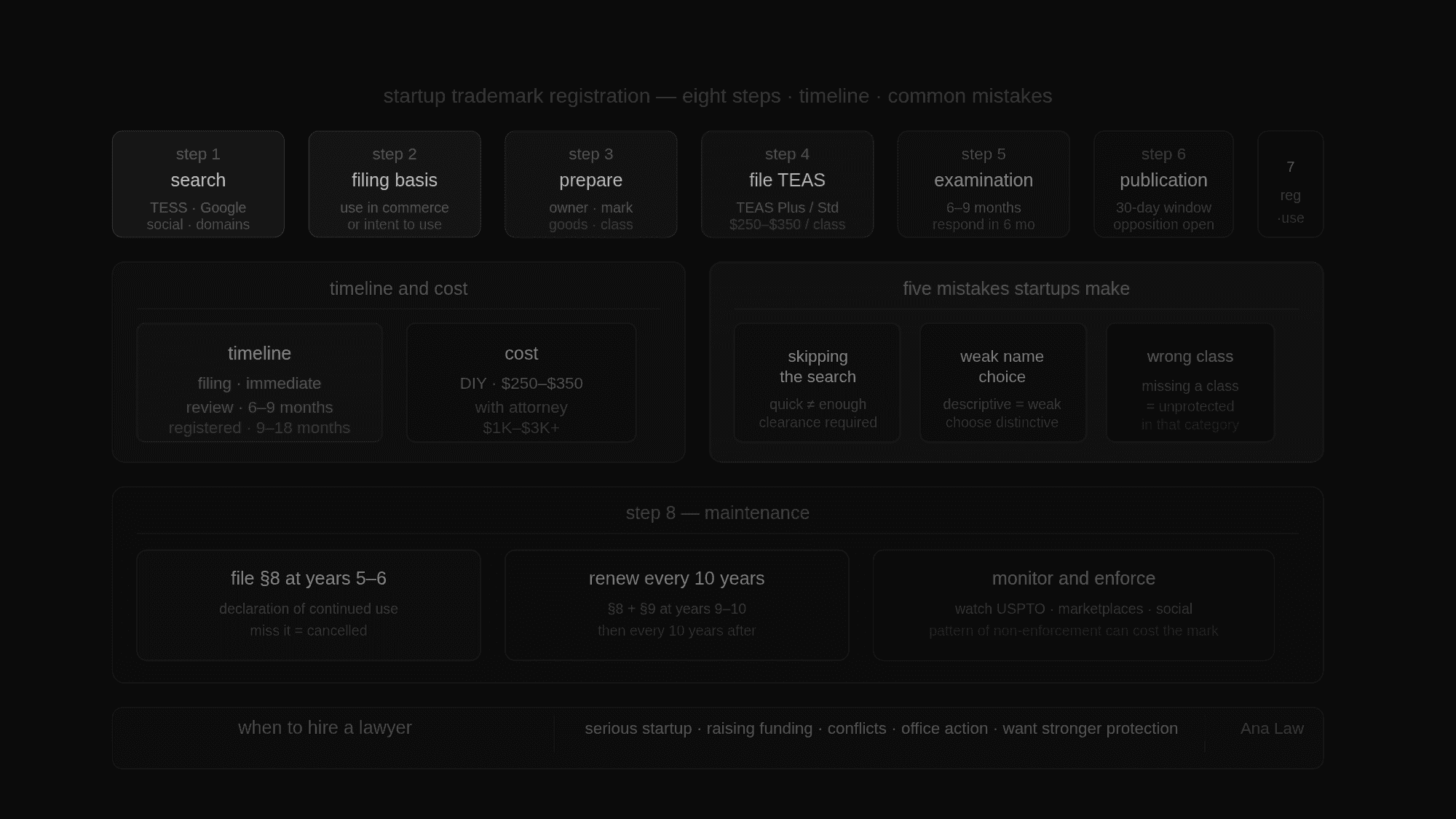
Step-by-Step: How to Register a Trademark
Step 1: Conduct a Trademark Search
Before filing anything, you need to check if your name is already taken.
Where to search:
USPTO database (TESS)
Google
Domain names
Social media
What to look for:
Similar names, not just exact matches
Same industry or category
Phonetic similarities
This is where many startups make mistakes. A quick search is not enough. You need a comprehensive clearance search.
Step 2: Choose Your Filing Basis
You will need to decide how you are filing.
Use in Commerce
You are already using the trademark publicly.
Intent to Use
You plan to use it soon. This is common for startups.
Most early-stage startups file under Intent to Use.
Step 3: Prepare Your Application
You will need:
Owner name, either you or your company
Trademark, either word or logo
Description of goods or services
Trademark class
Example:
SaaS product falls under Class 42
Clothing falls under Class 25
Choosing the wrong class can delay or weaken your protection.
Step 4: File with the USPTO
You will file through the USPTO TEAS system.
Filing options:
TEAS Plus, which is cheaper but stricter
TEAS Standard, which is more flexible
Cost:
About $250 to $350 per class
After filing, you will receive a serial number to track your application.
Step 5: Examination Process
A USPTO attorney reviews your application.
This can take 6 to 9 months.
They may issue an Office Action if:
Your name is too similar to another
Your description is unclear
Your trademark is too descriptive
You must respond within 6 months.
Step 6: Publication and Opposition
If approved, your trademark is published for 30 days.
During this time, others can oppose your trademark.
If no one objects, your application moves forward.
Step 7: Registration or Notice of Allowance
If you filed under Use in Commerce, you receive registration.
If you filed under Intent to Use, you must submit proof of use before registration is granted.
Step 8: Maintain Your Trademark
Trademarks require ongoing maintenance.
You must:
File between years 5 and 6
Renew every 10 years
Monitor for infringement
Common Trademark Mistakes Startups Make
Skipping a proper search
Choosing descriptive names
Filing in the wrong class
Trying to handle complex filings alone
Not enforcing their trademark
These mistakes can cost thousands later.
How Long Does Trademark Registration Take?
Typical timeline:
Filing: immediate
Review: 6 to 9 months
Registration: 9 to 18 months
Protection begins once you file.
How Much Does It Cost?
DIY:
$250 to $350 per class
With a lawyer:
$1,000 to $3,000 or more depending on complexity
When Should You Hire a Trademark Lawyer?
You do not always need one, but it is recommended if:
You are building a serious startup
You plan to raise funding
You are unsure about conflicts
You receive an Office Action
You want stronger protection
Many startups are forced to rebrand after scaling. This is avoidable with the right approach.
Final Thoughts
Registering a trademark is one of the highest return legal steps you can take as a founder.
It protects your brand, strengthens your business, and prevents problems before they happen.
The earlier you do it, the better.
Ready to Protect Your Brand?
If you are building a startup, your brand is one of your most valuable assets.
Ana Law helps founders secure trademarks, avoid costly mistakes, and protect their companies as they scale.
Book a strategy session to get started.